SPLATFACTORY3D
Our AI turns the full CAD model into a true-to-source scene you walk through on a standalone XR headset, with no manual decimation, nothing streamed away, and nothing leaving your network.
3D Gaussian Splatting exploded because it reconstructs the real world fast. So that is what everyone does with it: scan a room, a building, a face. Useful, and also the least interesting thing you can do with it. The hard problem is not copying what already exists. It is seeing what does not exist yet, at full fidelity, before you have spent a cent building it.
The splat trainer is open source and anyone can download it, so that was never the moat. The hard part, the part most teams skip, is pushing heavy CAD through a machine-learning pipeline and onto a headset without the whole scene falling apart. Closing that gap is the entire product. Everyone has the hammer; knowing where to swing it is the job.
The pipeline runs inside your own environment and reads the full model where it already lives. No decimated stand-in, no cleanup ritual, and nothing copied off your network.
A machine-learning model turns the geometry into a 3D Gaussian Splat: a scene made of millions of soft, colored points instead of polygons. Yes, this is the AI part, and no, we are not hiding it. How we get clean results out of it is the part we keep to ourselves.
It comes back as a scene you put on a standalone headset and walk around, with adaptive level of detail from the start so it stays smooth on hardware that fits in a backpack. A simplified mesh underneath gives you something solid to grab, rotate, and line up against.
No physical object, no scan, no camera. The geometry goes in, and a scene you can walk into and grab comes out. Here is the whole path, end to end.
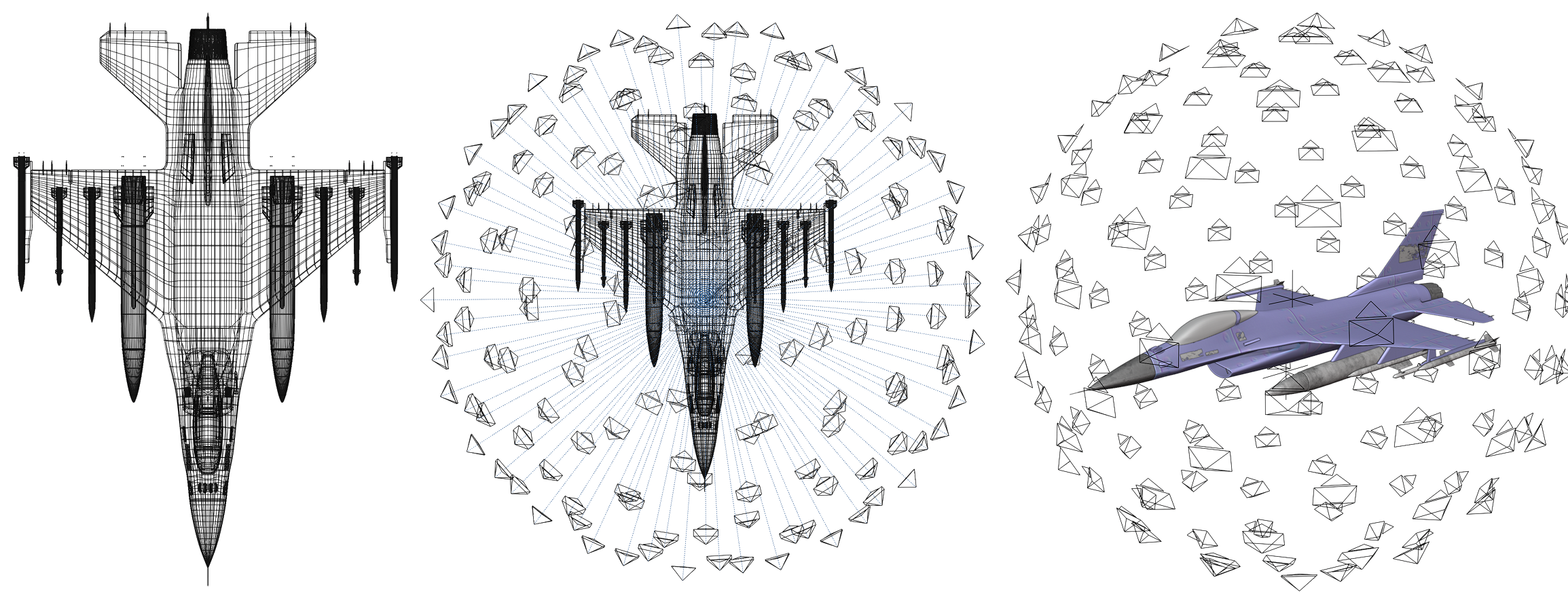
Built entirely from CAD. No camera, no scan, no physical object.
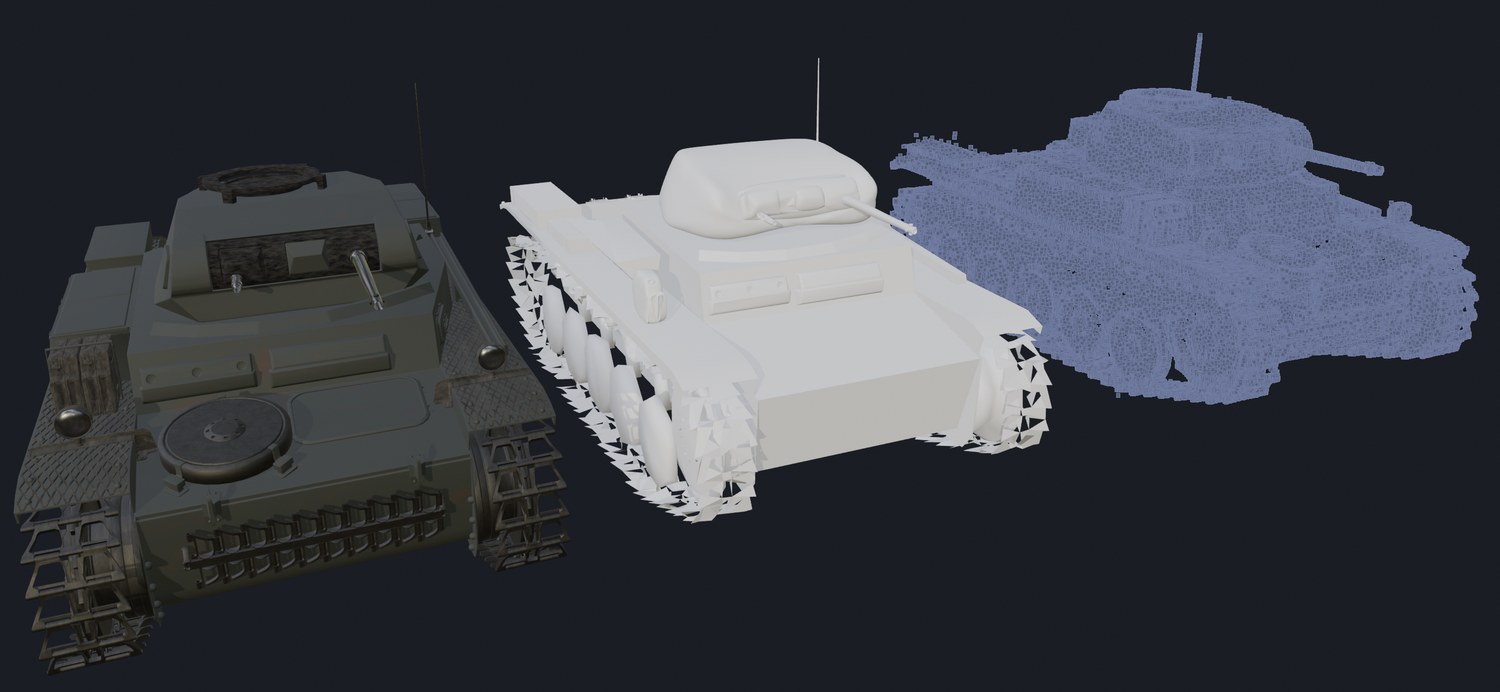
Exact CAD geometry, the shape your hand will actually touch on the headset.
One model, three stages. Sweep the scanner across and the engineering drawing develops into the real captured render the splat is built on.
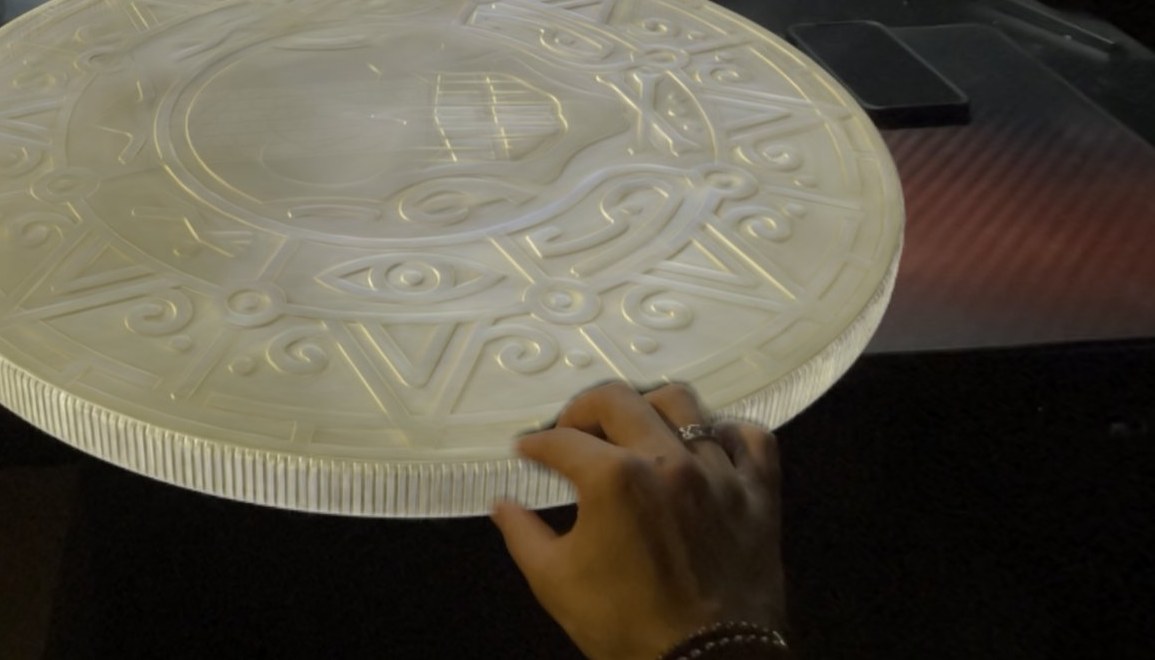
The method does not care what the source is. A single machined part or a whole campus, it is the same path: capture, train, pack, walk through. Fed something bigger, the engine just keeps going.
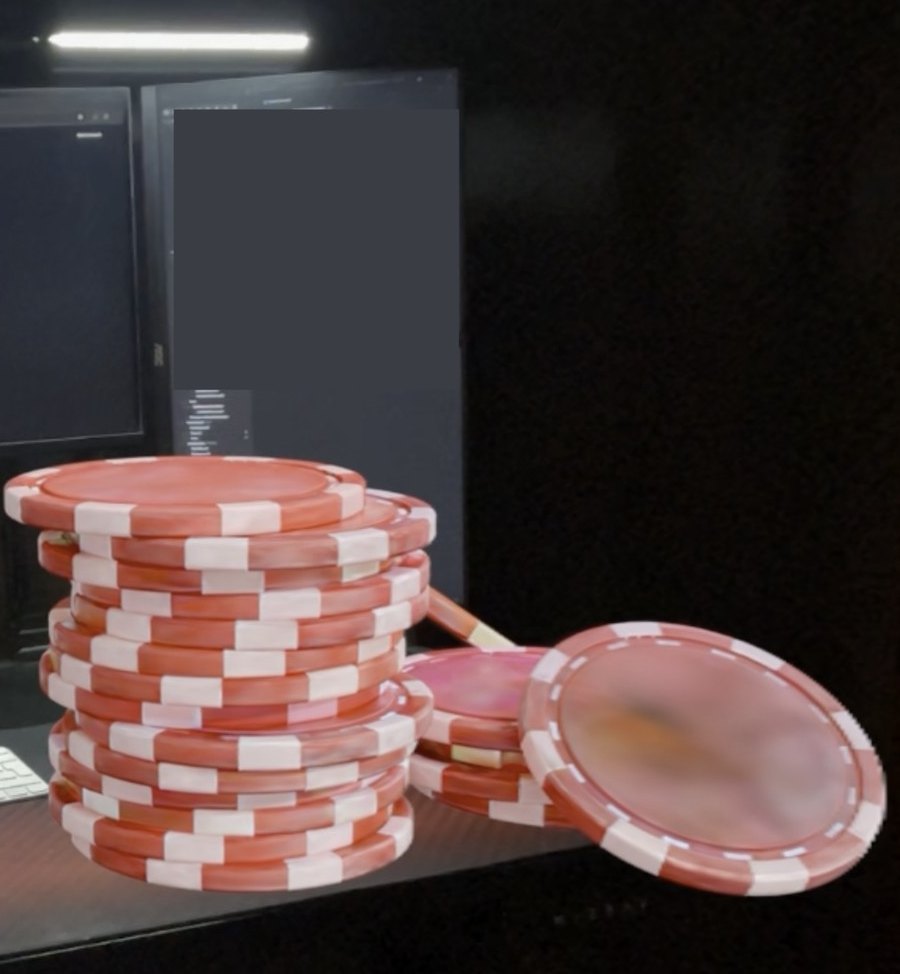

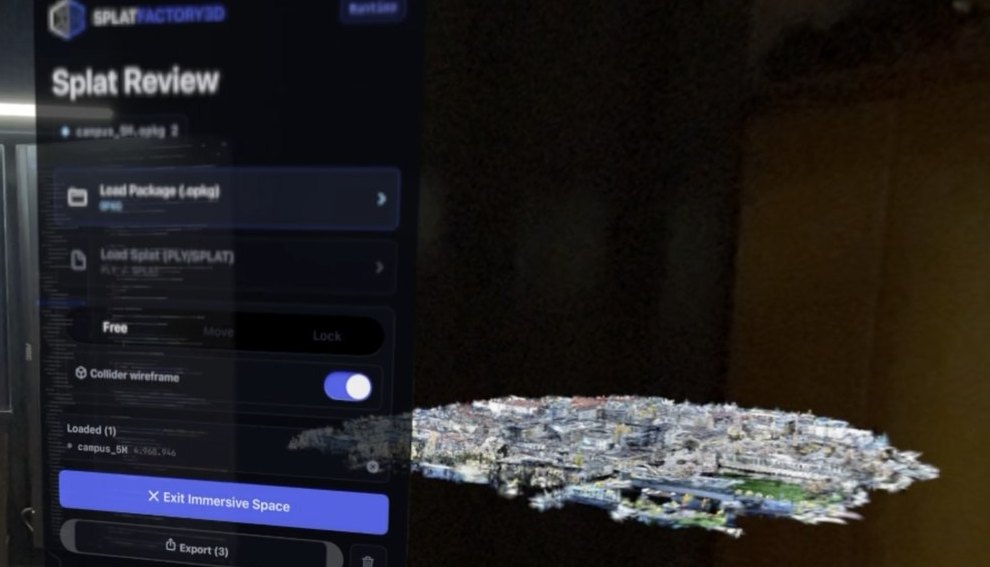
Same engine, same headset. A part, a full object, a whole site, each one fed straight onto the device.
The large captures we stress-test against
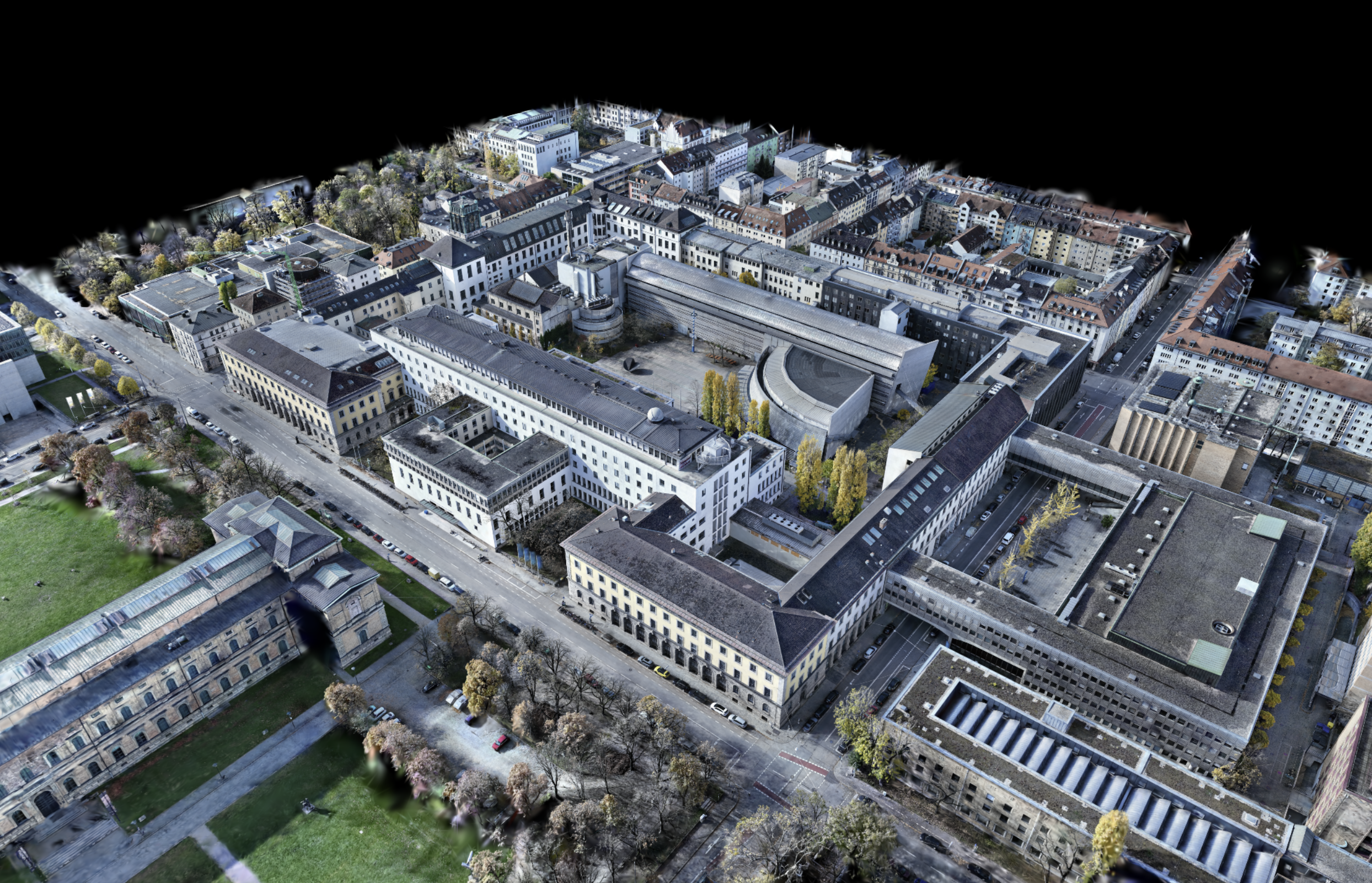
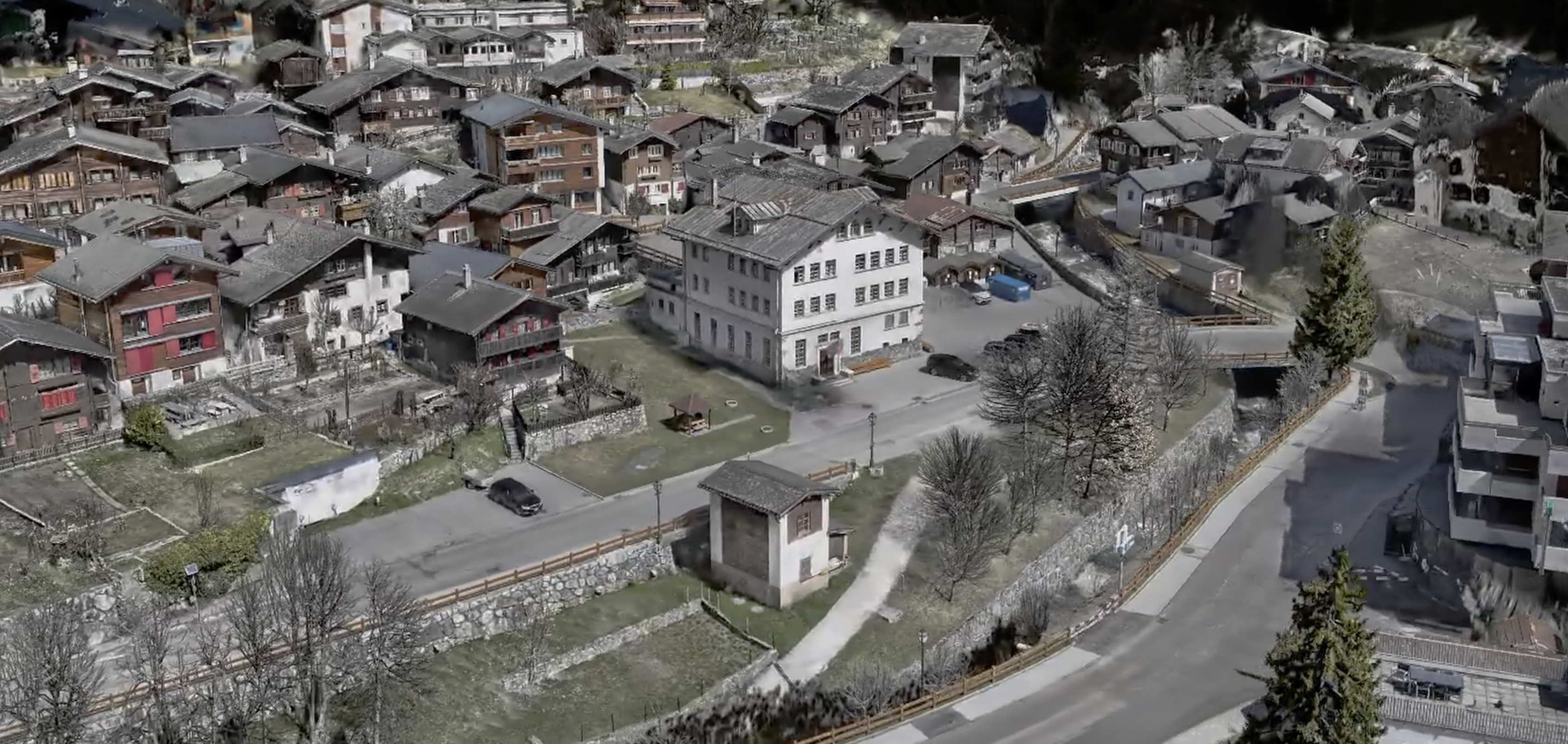
A quick word on the big captures: these are our own drone datasets, flown and processed in house, a full university campus and an alpine village. They are here for one reason. The same splat and adaptive-LOD packing that fits a single bracket onto a headset is what carries a whole site in there too. Getting scenes this large to run in XR is the hard part, and that is exactly the part that scales.
Loaded flat, a capture this size does not run slowly, it does not run at all. It fills memory and dies before it draws a frame. So the scene is not shipped as one pile. It is cut into five metre tiles, each one able to arrive coarse or sharp, and a budget walks around with you deciding which is which. The whole campus stays there. Only the part behind you goes flat.

The budget never changes. What it buys you does. Stand in the dense middle of the campus and two million splats are worth a few metres of sharp geometry. Walk somewhere quieter and the same two million reach five times further. Either way the campus is still all around you.
Real structure, real numbers. The 806 five metre tiles, their splat counts, the coarse base and the two million cap all come straight out of the packaged campus hierarchy. How tiles get picked is shown as distance-banded, which is the shape of the selector, not a byte-for-byte replay of it.

One of our large captures, running in your browser right now. Drag to orbit, zoom in, look around. The same kind of scene we pack onto a standalone headset.
Loads an interactive viewer on click. Heavier scene, best on a desktop browser.
Device-agnostic by design, not locked to a single headset. It runs on standalone XR today, and the engine is built to follow the category as more capable hardware ships.
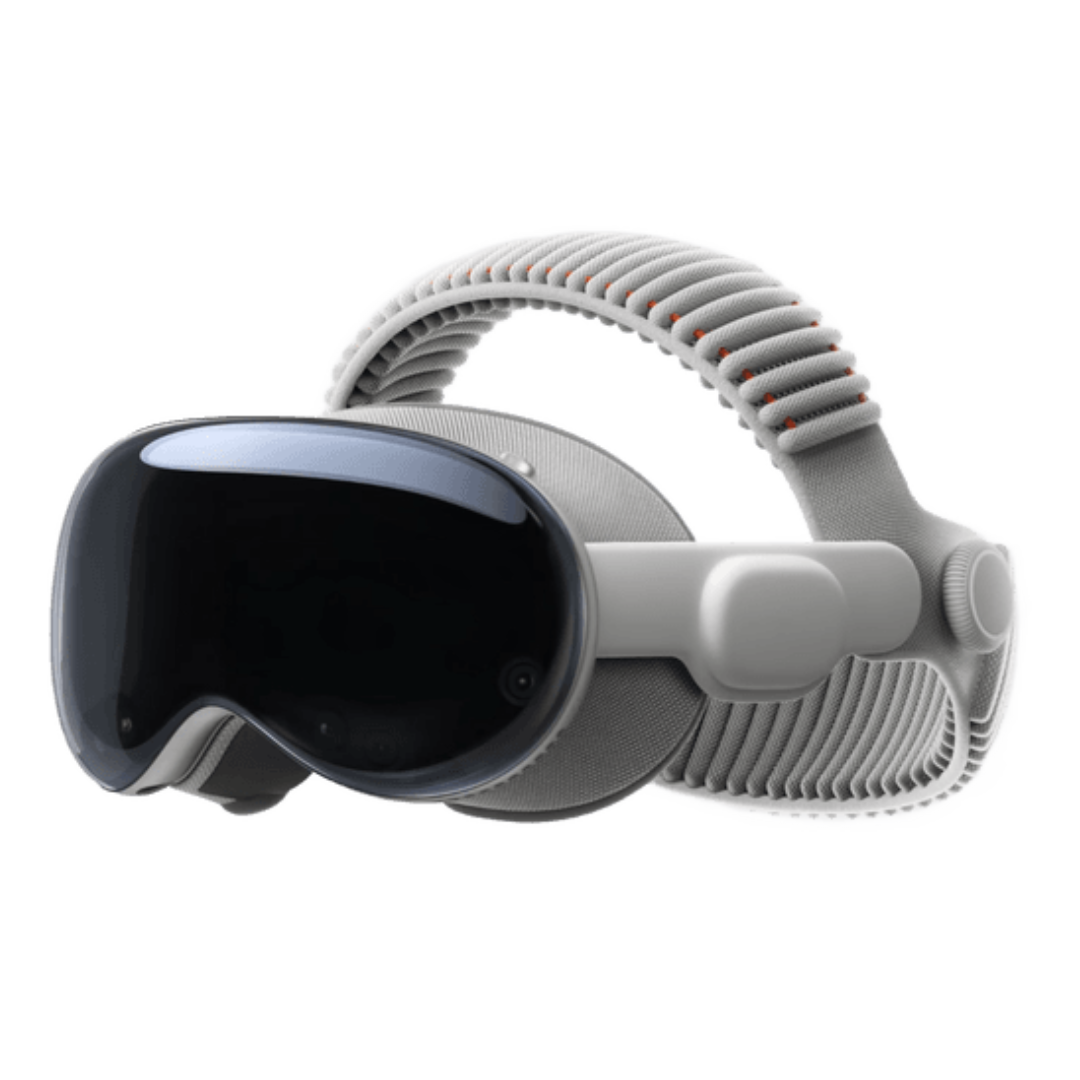
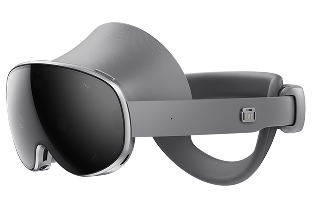
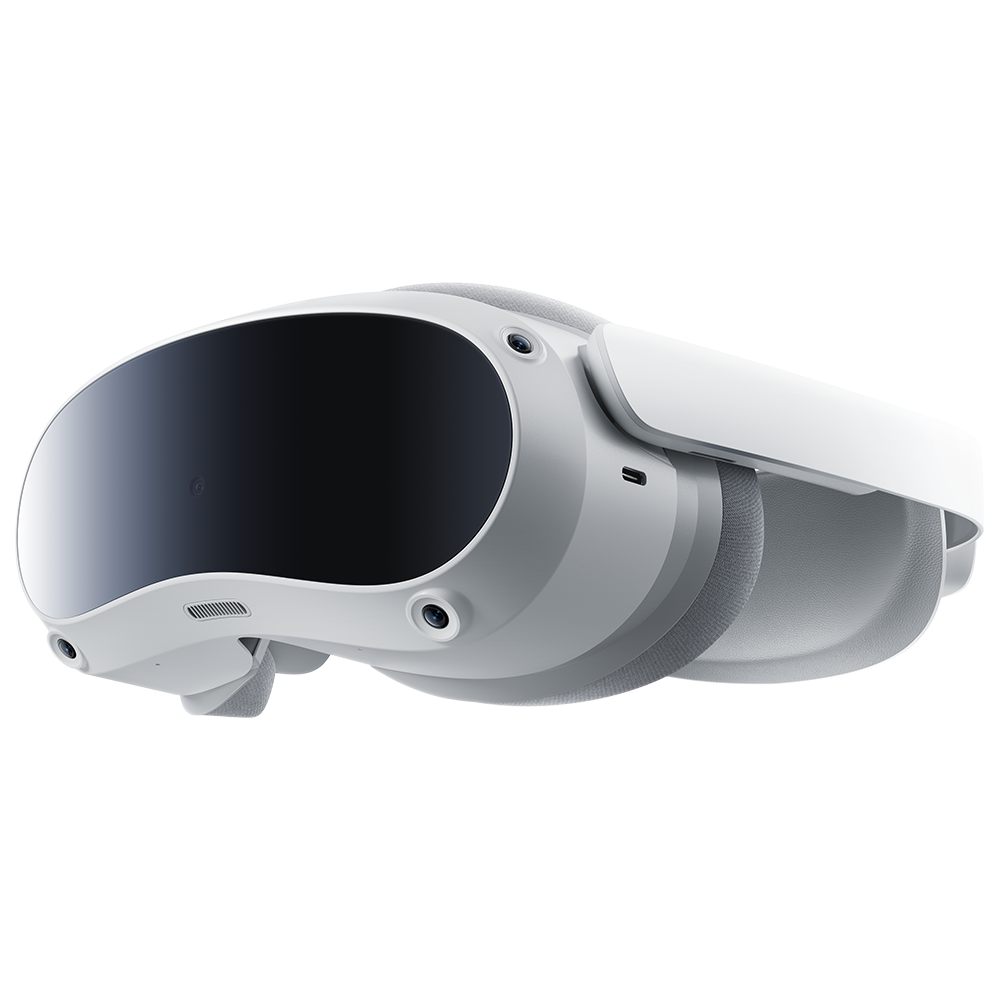
Teams that already live in CAD, review on a flat screen or wait on a prototype, and have no standalone XR pipeline of their own. We start there because that is where the pain is sharpest, and because the door is not blocked by the procurement wall the most regulated sectors put up on day one.
The common thread: the model is sensitive, and uploading it into someone else’s cloud is not on the table. The geometry is the most valuable thing the company owns, and it should stay that way.
3D Gaussian Splatting only recently made full-fidelity scenes real-time and explicit. Before it, this pipeline simply was not buildable.
Standalone XR finally renders rich scenes without a cable to a workstation. Good enough to review on, not yet good enough to get lazy about. That gap is the whole engineering problem, and it is exactly where we work.
At WWDC 2026 Apple announced native Gaussian-splat support shipping across the platform. When the company that builds the headset bakes your primitive into its SDK, you are early, not wrong.
A rendered splat is something you look at, streamed from a cloud. It has no shape your hands can catch. CAD-anchored interaction, running on your own network, is exactly where that primitive stops, and it is the whole product.

I am Jakub Majewski. I have spent years in industry working with extended reality, AI, and 3D, long enough to watch the same wall go up every single time: to get a heavy model into a headset, you either stream it from somewhere else or you burn days decimating it down to a cartoon. Both throw away the thing you actually wanted to review. The question that would not leave me was simpler than either one. What if you could put the entire model, untouched, straight onto standalone glasses, and just walk into it. SplatFactory3D grew out of that question and out of my master’s research in computer engineering at the Technical University of Munich (TUM), where I am a Senior Associate at TUM-XR, the extended-reality student initiative. It is an independent project, built on machine learning, informed by that research and that experience.
The pipeline works and new scenes are landing regularly. A controlled study across several real CAD parts closed this month, and the result held up when a second reviewer scored it blind. Bigger demonstrations are on the way through 2026, and this page is where they show up first. Check back, or reach out and I will keep you posted.
I am talking to early design and engineering teams. If that is you, reach out. If you just think the whole idea is wrong, reach out anyway, those conversations are more fun.
contact@majewski.studio